
Your Cart is empty
2023 HONDA N-BOX REVIEW
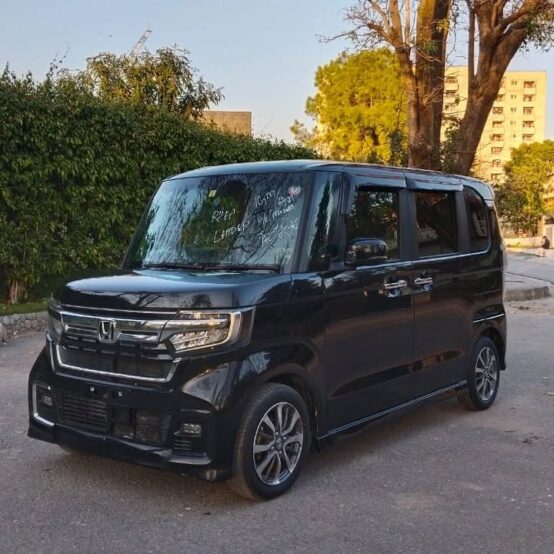
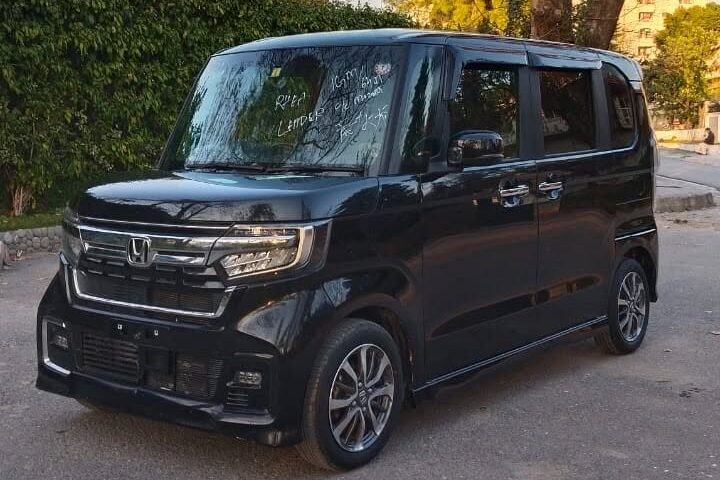
The 2023 N-Box sports a more contemporary look, featuring friendly, sleeker LED headlights and minimalist body panels. Custom trims elevate the aesthetic with a sleeker, sportier appearance, complete with a bold grille and enhanced lighting. Inside, Honda’s commitment to smart simplicity shines through. With a flat floor, generous headroom, and fold-flat rear seats, the cabin cleverly delivers minivan-like practicality within a compact footprint.
The Honda N-Box, a consistent best-seller in Japan’s kei car segment, continues to set the standard for compact vehicle design. As the original “N Series” pioneer, it masterfully blends thoughtful engineering with surprising interior spaciousness, redefining what’s achievable within strict kei car limits. The 2023 model, now in its third generation, perfectly embodies this tradition with modern refinements, advanced safety features, and enhanced convenience.
Designed for urban living, the new N-Box retains its iconic, boxy silhouette, a deliberate choice to maximize cabin space and visibility. Dual sliding rear doors offer effortless access in tight parking spots, while the upright seating and wide-opening doors ensure easy entry and exit for all passengers.
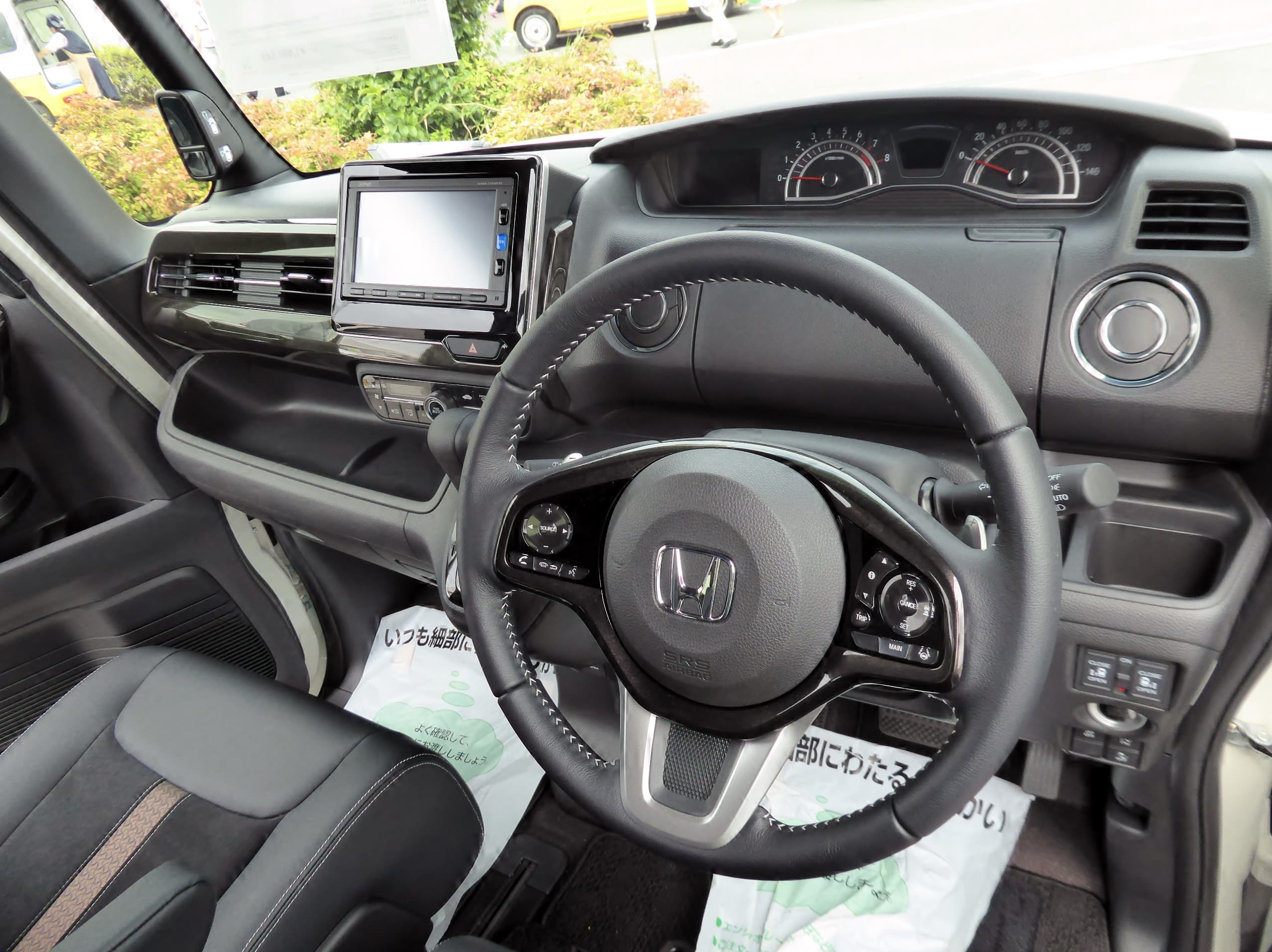
The interior materials have been upgraded, featuring stylish trim options, a floating center display, and a clean dashboard for a serene driving experience.
If interested in buying the Honda N-Box, we have prepared a separate Buyer’s Guide with details on what to look out for when buying a used one and the common pitfalls to avoid. Click here to purchase the Buyer’s Guide.
Also read The 2024 Daihatsu Tanto review
Honda N-Box Grades (2017 – 2023)
The lineup was divided into two distinct design approaches: the regular N-Box with its conventional and approachable styling, and the N-Box Custom featuring a more athletic and assertive appearance.
Regular Honda N-Box Grades
- N-Box G: Serving as the entry-level model, this trim came with the naturally aspirated 658cc S07B engine. Standard equipment included steel wheels with covers, halogen headlights, manual climate control, and power windows. A notable feature of this generation was that Honda Sensing safety and driver assistance technology became standard equipment across all models, including this base variant.
- N-Box L: Building upon the G trim, the N-Box L provided additional convenience and comfort features. Though mainly offered with the naturally aspirated engine, a turbocharged variant was available as the L Turbo. Common features included power sliding doors (often one side standard with optional dual doors), automatic climate control, keyless entry with push-button start, and upgraded interior materials. Enhanced infotainment systems were typically standard at this level.
- N-Box EX: This represented the premium non-Custom trim, focusing on enhanced comfort and advanced technology. Available with either the naturally aspirated engine or as an EX Turbo variant. A signature feature was often the Super Slide front passenger seat, which could move extensively to allow walk-through access to the rear or create additional cargo room. This trim also featured refined interior appointments and more sophisticated driver information systems.
Honda N-Box Custom Grades
- N-Box Custom G: This served as the entry point for Custom styling, incorporating the sporty exterior and interior design elements of the Custom family, even when equipped with the naturally aspirated engine. Distinctive exterior elements included a more assertive front fascia with unique grille patterns and modified headlight assemblies.
- N-Box Custom L: This variant combined the athletic Custom appearance with L-grade convenience features, offering amenities like power sliding doors and automatic climate control. The Custom L Turbo configuration was particularly popular, delivering both enhanced performance and practical everyday features.
- N-Box Custom EX: Representing the flagship Custom model, this trim provided the most comprehensive feature set and luxury appointments. The turbocharged engine was typically standard (Custom EX Turbo). Beyond L-grade amenities, it added features like the “Super Slide” front passenger seat, premium interior materials, and exclusive trim details, making it the most well-equipped option available.
2023 Honda N-Box Interior, Legroom & Space
Despite its compact kei car dimensions, the 2023 Honda N-Box delivers an exceptional sense of space and comfort, thanks to its tall profile, long wheelbase, and smartly optimized layout. The cabin feels unexpectedly roomy, with ample headroom, a flat floor, and generous legroom in both the front and rear. Designed for urban functionality, the N-Box easily accommodates four adults, offering a relaxing environment even on longer city drives.
Dual sliding rear doors make getting in and out effortless, especially in tight parking spaces or when handling children or elderly passengers. Honda’s clever “Ultra Seat” system and low step-in height enhance accessibility, while the nearly flat front passenger seat (on certain trims) can be folded forward to create extra loading space or extended legroom.
Even in base models, the N-Box offers a clean, thoughtful interior design with quality finishes and well-integrated controls. Upper trims like the Custom L and Custom L Turbo add premium features such as a leather-wrapped steering wheel, piano-black or metallic dashboard accents, and ambient LED lighting to elevate the atmosphere.
Standard equipment includes digital instrumentation, manual air conditioning, power windows, and a tilt-adjustable steering wheel. Mid- and upper-level trims gain enhancements like automatic climate control, keyless entry with push-start, steering wheel-mounted audio controls, and power sliding rear doors for added comfort and convenience.
The 2023 model also introduces Honda CONNECT in select trims—an infotainment system with a touchscreen display, smartphone integration, and remote control via mobile app.
Cabin Storage
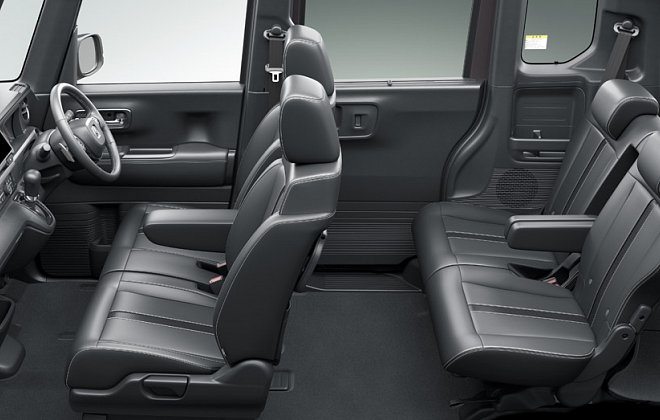
The N-Box shines in everyday usability with its clever storage options. A tiered dashboard includes open trays, a utility hook, and under-dash compartments. There’s a large glovebox, bottle holders in all doors, seatback pockets, and optional center console bins that help keep clutter at bay. The flat floor also allows flexible legroom and movement inside the cabin, ideal for families or delivery use.
Boot Space
about 141 litres of boot space with all seats upright, expanding to approximately 725 litres when the rear seats are folded flat

While compact on the outside, the N-Box’s cargo area is thoughtfully designed for versatility. Rear seats fold down completely flat, creating a low, wide loading space suitable for groceries, strollers, luggage, or even small furniture. On some trims, the rear bench can slide or tumble forward, increasing usable load length for taller or bulkier cargo.
Safety Features
All 2023 Honda N-Box models are equipped with the Honda SENSING suite as standard. This includes collision mitigation braking, lane departure warning, adaptive cruise control, road departure mitigation, and pedal misapplication control—a rare offering in the kei class. Higher trims add parking sensors, rear-view cameras, and more advanced assist systems, making the N-Box one of the safest small cars on the road today.
2023 Honda N-Box Exterior
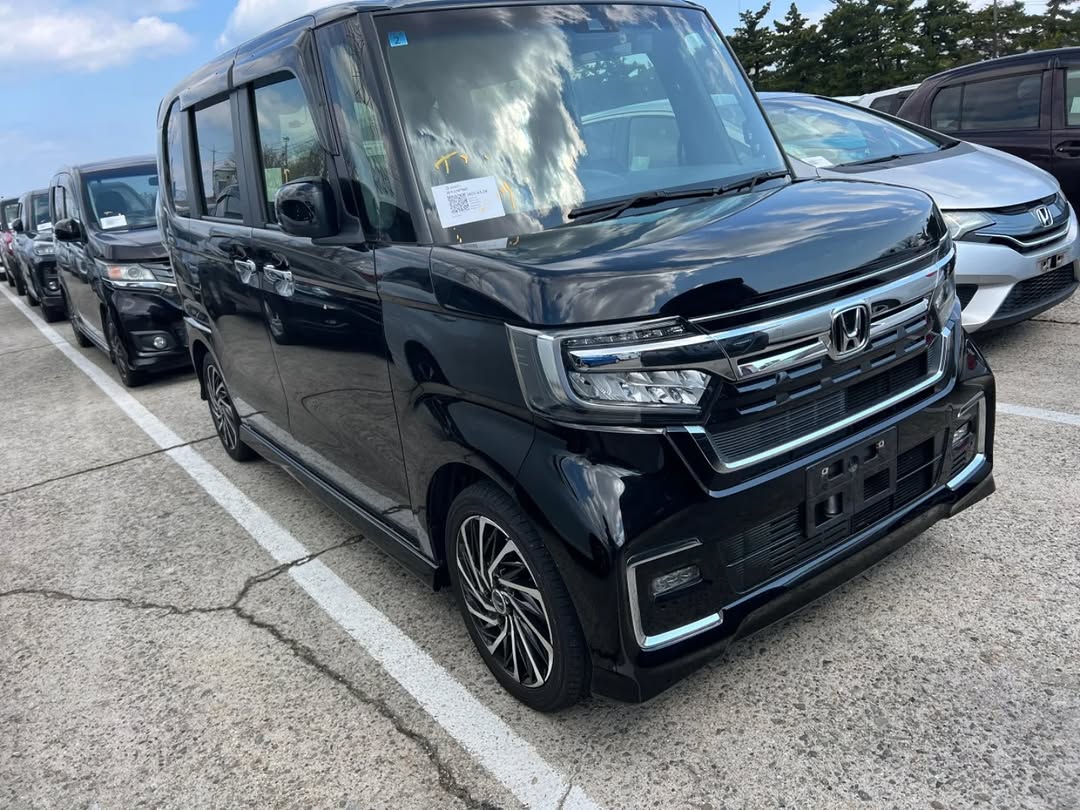
The 2023 Honda N-Box embodies the practical elegance of modern Japanese kei car design, where form follows function, yet still leaves room for charm. Designed primarily for urban use, the N-Box maintains a clean, box-like silhouette that maximizes interior volume while presenting a friendly, approachable look on the outside.
At the front, the standard N-Box model features rounded LED headlights with a soft, “human eye” shape and a body-colored grille that gives it a calm, balanced presence. Higher trims, including the Custom and Custom Turbo, introduce a bolder front end with a three-dimensional gloss-black grille, sleeker LED light strips, and sportier bumper treatments. These models deliver a more upscale or dynamic appearance while still retaining the vehicle’s core identity as a family-friendly city car.
Also read The 2024 Daihatsu Tanto review
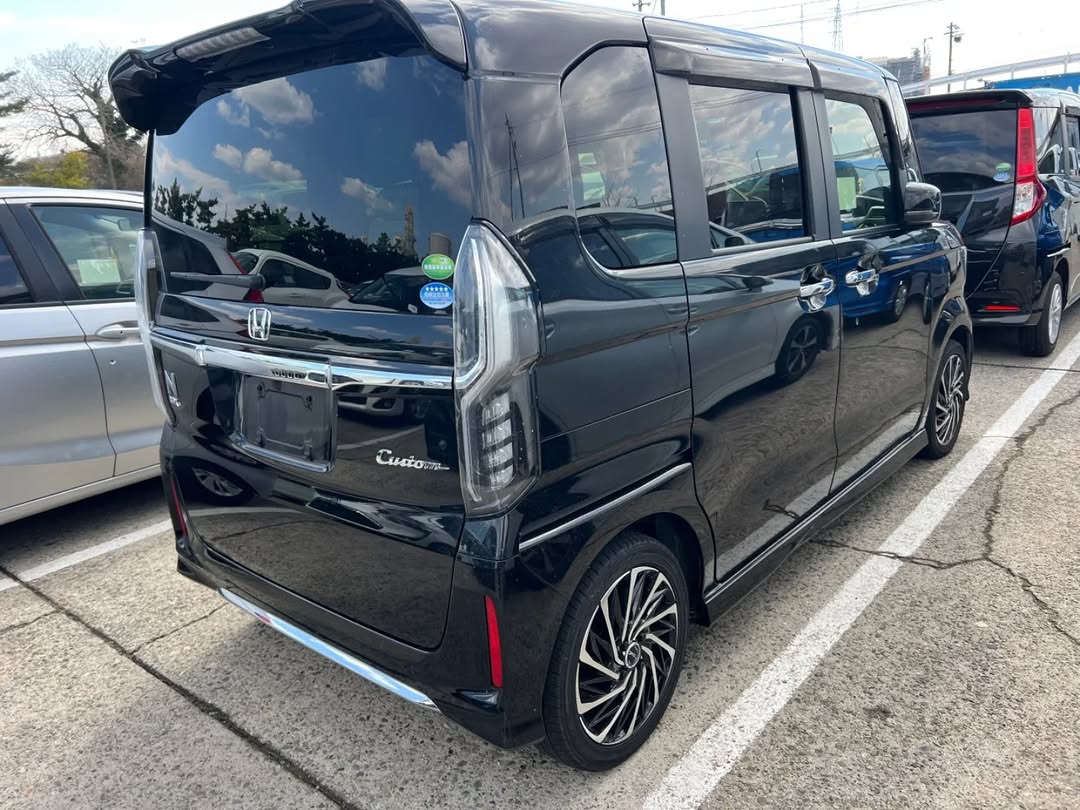
From the side, the N-Box’s vertical proportions are immediately noticeable. The high roofline, flat body sides, and dual power sliding doors are intentional design choices—aimed at making the cabin feel open and accessible. Large glass areas improve visibility and contribute to the N-Box’s airy interior experience. Wheel sizes range from 14 to 15 inches depending on the grade, with machined two-tone alloy wheels offered on the Custom models for added visual flair.
Around the rear, the design stays clean and geometric. Tall vertical taillights flank the tailgate, emphasizing the car’s height and providing a strong lighting signature at night. A roof spoiler and subtle chrome or piano black garnish appear on higher trims, giving the vehicle a refined, finished look from every angle.
2023 Honda N-Box Fuel Consumption
-
Naturally Aspirated 658cc Engine: ~20.0–21.2 km/L
-
Turbocharged 658cc Engine: ~18.0–19.5 km/L
2023 Honda N-Box Acceleration
-
NA 658cc Engine: 0–100 km/h in ~16.0 seconds
-
Turbo 658cc Engine: 0–100 km/h in ~11.8 seconds
Fuel Tank Capacity: 27 liters
Ground Clearance:
-
Standard / Custom models: 145 mm
-
Custom Turbo / AWD variants: up to 155 mm
Service Intervals
Minor Service: At 5,000 km. Requires Air Cleaner, Oil Filter, and Engine Oil.
Major Service: At 10,000km. Requires Air Cleaner, Oil Filter, Fuel Filter, ATF Filter, Cabin Filter, Plugs, Front Brake Pads, Rear Brake Pads, ATF Oil, and Engine Oil.
Stability and Handling
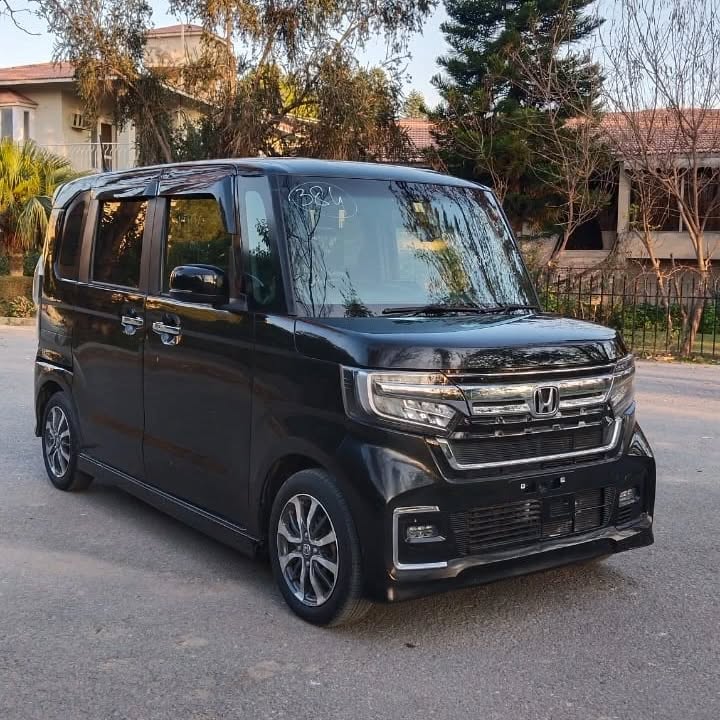
The 2023 Honda N-Box is engineered to deliver confident and comfortable handling in everyday urban settings. Its tall body may suggest top-heaviness, but Honda’s clever chassis tuning ensures stable and composed dynamics, particularly important in Japan’s dense traffic and narrow streets.
Built on a dedicated kei car platform with a low center of gravity and stiffened body structure, the N-Box strikes a balance between comfort and control. Light, accurate steering makes it easy to maneuver through tight turns and congested parking areas, while the suspension is tuned to soak up urban imperfections like speed bumps and potholes.
While not built for spirited driving, the N-Box remains stable at moderate highway speeds, especially in turbocharged variants. Electronic stability control (ESC), traction control, and ABS come standard across the lineup, helping ensure safety and predictability in all weather conditions.
Engine and Performance
The N-Box offers two versions of Honda’s 658cc three-cylinder engine:
-
Naturally Aspirated (NA) – Suited for smooth, fuel-efficient city driving. It’s ideal for users who prioritize ease of use over speed.
-
Turbocharged – Available on Custom L Turbo models, the turbo variant adds noticeable mid-range punch, making highway merging, overtaking, and light incline driving much easier.
Both engines are paired with a CVT (Continuously Variable Transmission), providing seamless acceleration and maximizing fuel efficiency. Power is delivered through front-wheel drive by default, with optional AWD available in Japan for buyers who need better traction in snowy or rainy conditions.For more information on this, we have prepared a separate Buyer’s Guide with full details. Click here to purchase the Buyer’s Guide.
Performance Summary:
-
NA 658cc Engine: Sufficient for city use, light and economical
-
Turbo 658cc Engine: More responsive, capable of highway driving with confidence
-
Fuel Economy: ~18–21 km/L (WLTC mode, depending on trim)
-
Acceleration (0–100 km/h): ~16.0 seconds (NA) / ~11.8 seconds (Turbo)
Reliability
As part of Honda’s trusted N Series lineup, the N-Box enjoys a reputation for reliability, low maintenance costs, and durable build quality. Owners across Japan consistently praise its dependability, particularly under the stop-start pressures of city driving.
Routine maintenance is straightforward and cost-effective, with long-lasting CVTs, durable engine components, and excellent parts support both domestically and internationally. Service intervals are generally every 5,000 to 10,000 km, depending on usage, with oil changes and fluid checks being the most common upkeep.
Thanks to Honda’s global service network and widespread parts availability, ownership remains hassle-free—even for buyers in markets importing used Japanese vehicles.
Resale Value: Good
Honda N-Box Competitors
-
Daihatsu Tanto
-
Suzuki Spacia
-
Nissan Roox
-
Mitsubishi eK Space
What We Like About the Honda N-Box
-
Best-in-class interior space and headroom
-
Excellent safety features (Honda SENSING standard)
-
Smooth CVT and responsive turbo engine (where equipped)
-
Refined ride and upscale cabin feel in higher trims
-
Proven long-term reliability
What We Don’t
-
Naturally aspirated engine might struggle on hills or highways
-
Limited cargo space with all seats upright
Conclusion
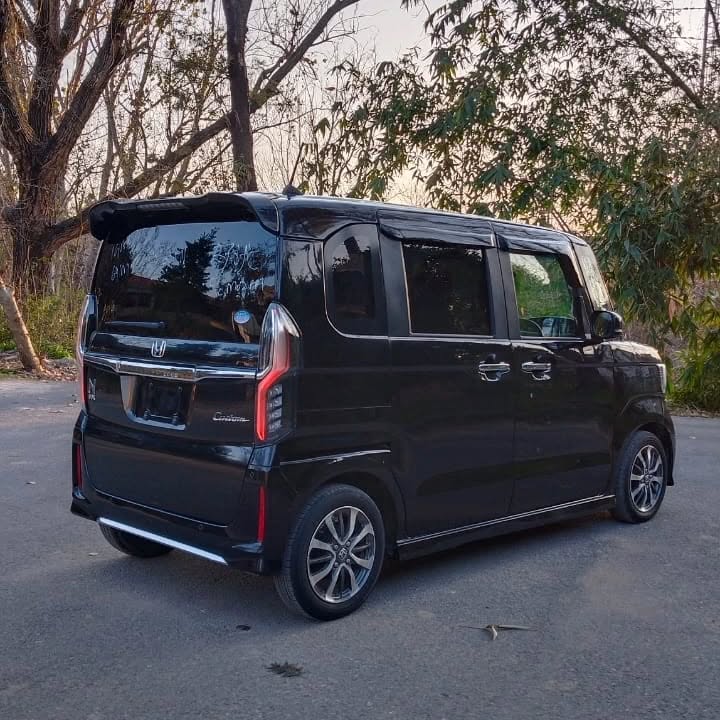
The 2023 Honda N-Box continues to set the benchmark for kei cars in Japan. With its exceptional use of space, advanced safety features, and solid performance in urban environments, it’s hard to beat. Turbo models provide extra flexibility, while the combination of reliability, resale value, and practicality makes it a favorite for city dwellers, small families, and senior drivers alike.
For those looking into buying a used or imported N-Box, we’ve also prepared a detailed Buyer’s Guide that includes trim comparisons, maintenance tips, and common issues. Click here to access the Buyer’s Guide.
For 2023 Honda N-Box owners, it is recommended that you always read the Owner’s Manual. Click here to download it.
If you are looking to purchase the Honda N-Box, email us directly via info@newzealandmotors.com, and we will get back to you immediately.